How to Tell If Weed Is Good: 7 Signs of High-Quality Cannabis
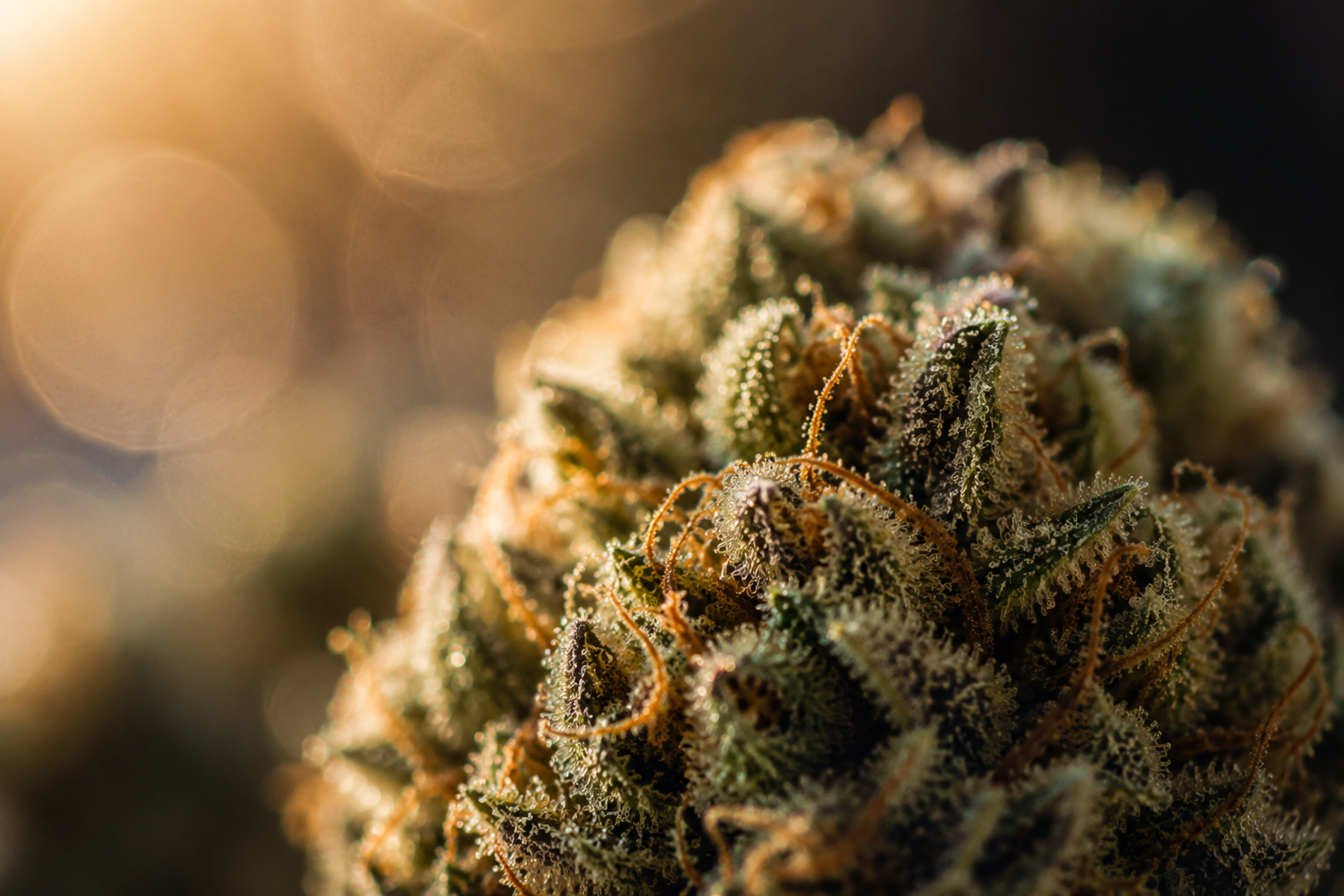
You open the jar.
The flower looks incredible.
Covered in frost. Bright orange hairs. Deep green with flashes of purple.
It has to be good.
Right?
Maybe.
One of the biggest mistakes cannabis consumers make is assuming that great-looking weed automatically means great weed.
Cannabis quality is more complicated than that.
THC percentage doesn't tell you everything. Neither does the strain name. Neither does how purple the flower is, how expensive the eighth was, or how many trichomes you can see in an Instagram photo.
But flower does leave clues.
Once you know what you're looking for, your eyes, nose and fingers can tell you quite a bit about the condition and character of the cannabis in front of you.
Here are seven things worth paying attention to.
1. Look at the Trichomes
That frosty coating covering quality cannabis flower isn't glitter.
It's trichomes.
Trichomes are tiny structures found on the surface of cannabis. Glandular trichomes are particularly important because they're associated with the production and storage of cannabinoids and aromatic compounds.
Under magnification, some look almost like tiny translucent mushrooms.
That's why heavily trichome-covered flower often gets described as:
Frosty.
Icy.
Crystalline.
A healthy covering of intact trichomes can be one positive indicator when visually evaluating flower.
But here's the important part:
More visible frost doesn't automatically mean better weed.
You can't accurately determine THC percentage simply by looking at trichomes, and a beautiful macro photograph can't tell you exactly how a product will affect you.
Think of trichome coverage as one piece of evidence, not the verdict.
2. Pay Attention to Color
Good cannabis isn't one particular shade of green.
Depending on genetics and growing conditions, flower can contain:
Bright green
Forest green
Lime
Olive
Purple
Violet
Orange pistils
Even near-black purple tones
Purple cannabis isn't automatically stronger.
Bright green cannabis isn't automatically fresher.
And darker flower isn't automatically worse.
What matters more is whether the flower looks healthy and consistent with the cultivar, rather than chasing one supposedly perfect color.
What should get your attention are colors or patches that look wrong rather than merely different.
Gray or white fuzzy material, unusual powdery patches or suspicious discoloration deserve more scrutiny because visible appearance alone cannot establish whether flower is free from mold or other contaminants.
That's exactly why regulated cannabis undergoes laboratory testing.
3. Smell It
This might be one of the most useful—and enjoyable—parts of evaluating flower.
Open a fresh jar of aromatic cannabis and you may immediately get:
Citrus.
Gas.
Pine.
Earth.
Fruit.
Skunk.
Pepper.
Flowers.
Candy.
Or something that's almost impossible to describe.
Those aromas are influenced in part by volatile compounds including terpenes.
And freshness matters here.
Research has shown that terpene profiles can change during storage because these compounds are volatile, while other studies have documented terpene losses as cannabis ages. PubMed
So don't just ask:
Does it smell strong?
Ask:
Does it smell distinct?
A recognizable, expressive aroma can tell you more about the character of the flower than simply searching for the loudest smell in the room.
And start remembering which aromas you enjoy.
That's where things get interesting.
4. Check the Freshness
Pick up a bud.
Gently press it.
What happens?
Good flower shouldn't immediately disintegrate into dust.
But it shouldn't feel soaking wet either.
Cannabis exists in a balance between overly dry and excessively moist, and post-harvest handling and storage can materially affect the flower over time. Research has found that storage conditions influence the stability of cannabinoids and terpenoids. PubMed
Consumers notice this too. Research examining cannabis purchasing decisions found that people commonly considered moisture, brittleness, trichomes, stems and visual appearance when judging perceived quality. PubMed Central (PMC)
The perfect feel varies somewhat.
But if the bud turns to powder the moment you touch it, that's information.
If it feels suspiciously damp, that's information too.
5. Look at the Structure
This is where things can get misleading.
People often associate dense, perfectly shaped buds with premium cannabis.
And yes, beautiful structure can indicate careful cultivation and handling.
But genetics matter.
Some cultivars naturally produce tighter flower.
Others grow more open and airy.
Small buds aren't automatically bad.
Large buds aren't automatically premium.
A better question is:
Does the flower look healthy and well-developed for what it is?
You're evaluating the whole specimen—not holding every bud to an imaginary beauty standard.
6. Look at the Trim
Quality flower should mostly look like...
Flower.
Not a bag of stems and leaves with a few buds hiding inside.
A careful trim can make flower more visually appealing and remove excess plant material.
But don't fall into the opposite trap either.
An absolutely perfect machine-manicured nug isn't automatically superior to flower with a slightly more natural trim.
In fact, aggressive handling can knock delicate material from the flower.
What you're looking for is balance:
Well-presented flower without excessive leaf or stem material.
Trim quality tells you something about processing and presentation.
It doesn't tell you everything about the cannabis itself.
7. Look at Everything Together
This is the big one.
Never judge cannabis from a single characteristic.
Not THC.
Not color.
Not density.
Not trichomes.
Not aroma.
Not the price.
Not the strain name.
Instead, build a picture.
How are the trichomes?
Does the color look healthy?
How was it trimmed?
Does it appear overly dry?
Is the aroma expressive?
What does the lab information say?
Who grew it?
And eventually:
How did it actually make you feel?
That's the part no photograph can answer.
Can You Tell How Strong Weed Is Just by Looking at It?
No.
And this is worth saying clearly.
You cannot reliably determine THC or CBD percentage from a photograph of cannabis flower.
You also can't identify an exact terpene profile simply from appearance.
That's what laboratory analysis is for.
In regulated California cannabis, laboratories test products for cannabinoids and terpenes along with pesticides, heavy metals, microbial impurities, mycotoxins, moisture, water activity and other factors. Results are reported on a Certificate of Analysis, or COA. Department of Cannabis Control
That's a very different type of information from a visual quality assessment.
Both can be useful.
They just answer different questions.
Beautiful Weed Can Still Be Bad Weed—for You
There's another definition of quality that doesn't get talked about enough.
Your experience.
Imagine two jars.
One is absolutely gorgeous.
Covered in trichomes.
Expensive.
High THC.
Photographs beautifully.
You consume it and don't particularly enjoy the experience.
The second doesn't win the beauty contest.
But every time you use it, you get exactly the experience you wanted.
Which one is better?
For you?
Probably the second one.
That's why understanding cannabis shouldn't end when you inspect the flower.
It should continue after you use it.
Look. Smell. Experience. Remember.
Learning to recognize good cannabis isn't about becoming a weed snob.
It's about becoming a more informed consumer.
Look at the flower.
Pay attention to the trichomes.
Notice its color and structure.
Smell it.
Check its freshness.
Read the lab information when it's available.
Then pay attention to what actually happened when you consumed it.
Because the most beautiful bud in the dispensary isn't necessarily the cannabis you'll love most.
And ultimately, that's what matters.
Know your weed. Know yourself.